Concrete Patio Cost: Guide in 2026
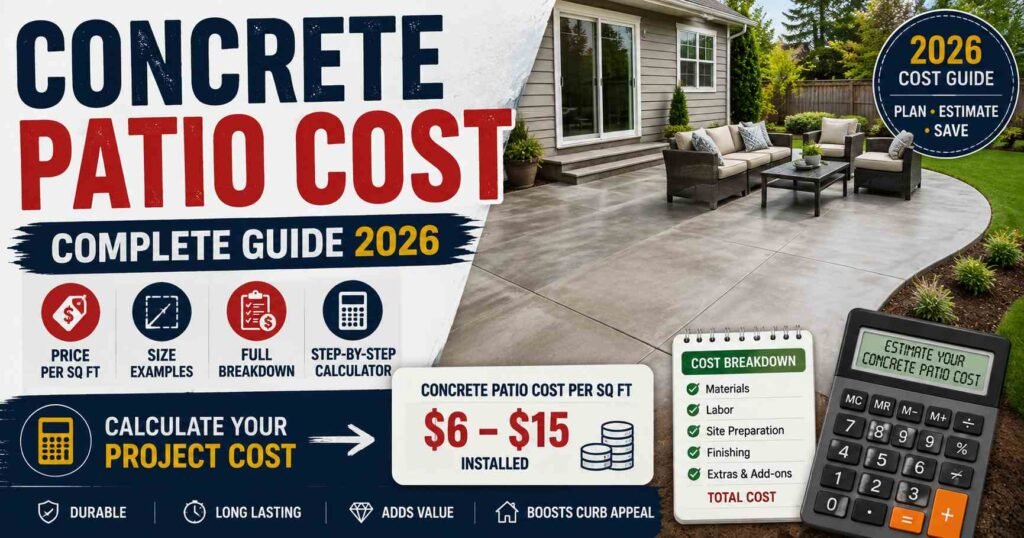
Wondering how much a concrete patio will cost for your home in 2026? In 2026, patio costs depend on size, thickness, concrete type, labor, site preparation, reinforcement, finish, location, and accessibility. When estimating a concrete patio cost, consider the patio size and a slab thickness of 4–6 inches.
Keep the concrete type and finish simple to avoid unnecessary costs. Other factors include labor, site leveling, rebar or wire mesh reinforcement, location, and city-based rates. Equipment and material delivery can also affect the price, especially when the site is difficult to access.
We will not only discuss the price per square foot. We will also explain the total project cost, different patio sizes, practical examples, and the complete calculation process so you can estimate your project more easily.
How Much Does a Concrete Patio Cost
The actual cost of a concrete patio can vary depending on the location, patio size, site conditions, concrete type, and finishing options. In general, a basic concrete patio may cost around $6–$8 per square foot. This option is suitable for simple residential projects and usually includes a plain concrete finish.
A standard concrete patio cost about $9–$12 per square foot. It can include better site preparation, wire mesh reinforcement, concrete placement, and a finished surface. A broom finish is commonly used for this type of patio because it provides a simple, practical, and budget-friendly surface with better traction.
The cost can increase when additional preparation or reinforcement is required. Difficult access, poor soil conditions, grading, excavation, or extra base material may also increase the total project cost.
Decorative concrete patios generally cost more because they may include stamped patterns, special textures, colors, or other decorative finishes. These options require more labor and materials than a basic patio.
For an accurate estimate, consider the patio size, concrete thickness, site preparation, reinforcement, labor, delivery, and desired finish. Larger patios may have a lower cost per square foot, while small or complex projects can have a higher rate.
Concrete Patio Cost Per Square Foot×
In 2026, the concrete patio cost in the USA is about $6–$18 per square foot, including materials and labor. Basic patios cost $6–$8, standard finishes cost $9–$12, and decorative patios cost $13–$18.
Formula:
Total Cost = Patio Square Footage × Cost Per Square Foot.
| Patio Size | Square Feet | Estimated Cost $6-$18/sq ft |
| 10×10 | 100 | $600-$1800 |
| 12×12 | 144 | $864-$2592 |
| 15×20 | 300 | $1800-$5400 |
| 20×20 | 400 | $2400-$7200 |
| 20 ×30 | 600 | $3600-$10,800 |
Actual prices vary by location and design. Get three contractor quotes before starting.
Concrete Patio Cost by Size
20 × 20 Concrete Patio
The cost of a concrete patio depends on its size, labor, materials, and the type of finish you choose. In 2026, the average concrete patio cost is about $6 to $18 per square foot. A basic finish is usually more affordable, while decorative finishes can increase the total cost.
For example, a 20 × 20 patio has 20 × 20 = 400 square feet. At $6 per square foot, the basic cost would be about $2,400. With a decorative finish at $18 per square foot, the cost could reach $7,200. This size works well for a small outdoor sitting area with chairs, a table, or other furniture.
20 × 30 Concrete Patio
A 20 × 30 patio provides a larger outdoor living area.
20 × 30 = 600 square feet
At $6 per square foot, the estimated cost is $3,600, while an $18 per square foot decorative finish could bring the cost to about $10,800. This space can accommodate a dining table, chairs, planters, and other outdoor features.
These are only example estimates. The actual cost can vary based on your location, project size, site conditions, materials, labor, and the finish you choose.
Concrete Patio Cost by Thickness
Concrete patio thickness affects both its cost and durability. A thinner slab usually costs less, but it may not provide enough strength for heavier use. A thicker slab costs more because it needs more concrete, but it offers better strength and durability.
- Inch Concrete Patio
A 4-inch slab is suitable for small patios where people may sit or place light furniture. Wire mesh or fiber reinforcement can help improve its strength.
- Inch Concrete Patio
A 6-inch slab can be suitable for areas with heavier loads, such as vehicle use. Rebar may be used for added strength. The right thickness depends on soil conditions, weather, reinforcement, expected load, and local building codes. Always discuss these factors with a contractor before starting the project.
What Factors Affect Concrete Patio Cost
There is no fixed price for a concrete patio because the cost varies by location and project. Labor rates, material prices, site conditions, and design requirements can all change the final estimate. Understanding the following factors can help you plan your budget better.
Patio Size
The size of the patio directly affects the cost. A larger patio requires more concrete, materials, and labor. For example, a 600-square-foot patio will generally cost much more than a 100-square-foot patio.
Concrete Thickness
A thicker slab requires more concrete and increases the overall cost. A thinner slab may cost less but can be weaker if it is not suitable for the project. Slabs around 4 to 6 inches thick are commonly used for driveways and smaller concrete areas. Increasing the thickness also raises both material and labor costs.
Site Preparation
Before pouring concrete, the ground may need excavation, grading, old concrete removal, soil preparation, compaction, and gravel. If the site needs extensive preparation, this part alone can add around $500 to $2,000.
Labor
Larger projects and thicker slabs usually require more labor. Workers handle forming, pouring, leveling, screeding, finishing, and cutting control joints. Labor rates are often higher in cities than in rural areas, while complex designs can also increase labor costs.
Reinforcement
Reinforcement can make a slab stronger and more durable. Common options include wire mesh, rebar, and fiber reinforcement.
Concrete Mix
A standard patio is $3000 PSI concrete. For areas exposed to harsh or changing weather, a stronger mix of about 3,500 to 4,000 PSI may be more suitable.
Patio Finish
Broom finish is usually the most affordable option. Smooth finishes cost more, while stamped and colored finishes can significantly increase the price.
Site Access
Easy truck access can help control costs. If the truck cannot reach the work area, a concrete pump may be needed, adding roughly $200 to $800.
Concrete Patio Cost Breakdown
To understand the total patio cost, it is important to know what is included in the contractor’s quote. Not every contractor includes the same services, so prices can vary from one quote to another. Some contractors may include site preparation, concrete delivery, and installation in their price, while others may charge for certain services separately.
| Cost Component | What is includes |
| Concrete | Ready-mix material |
| Labor | Pouring and Finishing |
| Site preparation | Excavation and grading |
| Base | Gravel |
| Reinforcements | Mesh, rebar, or fiber |
| Forms | Formwork |
| Delivery | Concrete delivery |
| Finish | Broom or decorative finish |
Before signing a contract, ask the contractor to clearly explain what is included and what is not. Check whether costs such as site preparation, delivery, labor, finishing, and cleanup are covered. Understanding the quote in advance can help you avoid unexpected charges and make a better decision.
Ready-Mix vs. Bagged Concrete for a Patio
When planning a concrete patio, one of the first choices is whether to use ready-mix or bagged concrete.
Ready-Mix Concrete
A good option for larger patio projects. A concrete truck delivers the mixed concrete directly to your site, saving time and providing consistent quality. So, minimum delivery charges can make it expensive for smaller quantities.
Bagged Concrete
Better for small patios, repairs, or minor projects. You can mix it yourself and control the amount of concrete you need. The downside is that mixing many bags can take more time and labor for a large patio.
When comparing costs, consider both material and labor. For larger patios, ready-mix is often the more practical choice
| Factor | Ready-mix concrete | Bagged concrete |
| Material cost | Cheaper in bulk | More expensive per bag |
| Labor | Less labor needed | High labor – mixing by hand |
| Mixing | Pre-mixed in truck | Must mix on-site |
| Delivery | Truck delivery to site | Self pick-up and transport |
| Equipment | No equipment needed | Mixer, wheelbarrow, tools |
| Best for | 200+ sq ft patios | Small repairs, <50 sq ft |
| Time | Fast, 1 pour | Slow, multiple batches |
Additional Concrete Patio Costs
When planning a concrete patio, don’t look only at the concrete and labor costs. Several additional expenses can affect your final budget.- Old Patio Removal: Removing an existing patio can add extra labor and disposal costs.
Excavation and Grading: The site may need digging, leveling, or slope correction before pouring concrete.
Gravel Base: A proper base may be required to support the slab.
Reinforcement: Wire mesh, rebar, or other reinforcement can increase the cost.
Concrete Delivery: Delivery fees may apply, especially for smaller orders.
Concrete Pumping: A pump may be needed when the truck cannot reach the work area.
Difficult Access: Limited access to the site can increase labor and equipment costs.
Drainage: Drainage work may be necessary to prevent water from collecting around the patio.
Steps and Borders: Adding steps, borders, or other features increases the overall price.
Decorative Finish and Sealing: Stamped finishes, special textures, and sealing usually cost more than a basic finish.
Permits: Some projects may require permits or inspection fees. Many homeowners focus on the price per square foot and forget these extras. As a result, the final cost can be 20% to 30% higher than the initial estimate.
Before accepting a quote, ask the contractor exactly what is included and what will be charged separately.
How to Calculate Concrete Patio Cost Step by Step
You can estimate your concrete patio cost by following these 10 simple steps:
1. Measure Length and Width
Multiply the patio length by its width to find the square footage.
Example: 20 ft × 20 ft = 400 sq. ft.
2. Choose the Thickness
A patio is commonly 4 inches thick, while areas designed for vehicles may need about 6 inches.
Example: Use 4 inches for a standard patio.
3. Calculate Concrete Volume
Multiply length × width × height in feet to get cubic feet.
Example: 20 × 20 × 0.33 = 132 cu. ft.
4. Convert to Cubic Yards
Divide cubic feet by 27.
Example: 132 ÷ 27 = 4.89 cu. yd.
5. Add Waste
Add around 10% extra concrete to avoid running short.
Example: 4.89 × 1.10 = 5.38 cu. yd.
6. Calculate Material Cost
Multiply cubic yards by the concrete price per yard.
Example: 5.38 × $160 = $861.
7. Add Labor Cost
Labor can vary depending on the project and site conditions.
Example: 400 sq. ft. × $7 = $2,800.
8. Include Site Preparation
Add costs for excavation, soil work, leveling, and base preparation.
Example: Site preparation may add several hundred dollars.
9. Add Finishing Costs
Include broom or stamped finishes, color, sealant, and other finishing work.
Example: A stamped finish costs more than a basic broom finish.
10. Compare Contractor Quotes
Check what each quote includes before placing your order.
Example: One quote may include delivery and preparation, while another may charge separately.
Common Mistakes
When planning a concrete patio, many homeowners make simple budgeting mistakes that can increase costs or affect the final result. The basic rate may not include sealing, site preparation, old concrete removal, finishing, permits, or cleanup. These extras can increase the total budget.
Uneven ground, poor soil, excavation, and a weak gravel base can cause problems later. Saving money on the base may lead to expensive repairs. A 4-inch slab may work for light residential use, but heavier vehicle loads may require a thicker slab and proper reinforcement.
Bagged concrete can be useful for small repairs. For larger projects, ready-mix concrete may be more practical and cost-effective. Compare at least three contractor quotes and ask whether reinforcement, sealing, permits, finishing, and cleanup are included.
Choose the finish, sealer, or stamped design before work begins to avoid unexpected extra costs. Do not compromise on these important factors just to reduce the initial cost. Proper planning and construction can help a patio last for many years.
Frequently Asked Questions
Q: Is a concrete patio cheaper than pavers?
Yes, concrete requires less material and labor, while pavers need to be installed one by one.
Q: How much does labor cost for a concrete patio?
Labor can make up around 30–60% of the total project cost, depending on access, finish type, and local labor rates.
Q: Does site preparation increase patio cost?
Yes, site preparation adds the most cost, including removing the old patio, digging, leveling, adding gravel or base, and compacting the ground.
Q: How can I get an accurate concrete patio estimate?
For an accurate estimate, take proper measurements and contact contractors for quotes.
Conclusion
In 2026, concrete patio costs depend on the project size, slab thickness, finish, and site condition. Basic concrete may cost around $6–$12 per square foot, while stamped or decorative concrete can reach about $18 per square foot.
For a 20-square-foot area, the basic concrete cost could be roughly $120–$240, depending on the rate. However, do not estimate the budget from the square-foot price alone. Reinforcement, delivery, site preparation, labor, sealing, and finishing can increase the total cost.
Before starting the project, get quotes from 3–4 contractors and check what each quote includes. Basic finishes are suitable for a simple project, while decorative options can provide a more premium look.
These prices are general estimates. Your final cost will depend on your project size, location, and local labor rates. A good contractor should provide a clear and professional estimate with all major costs listed.