60 lb VS 80 lb Concrete Bags: Which One to Buy 2026
Are you confused about whether to buy 60 lb VS 80 lb Concrete Bags for your project? Many people choose a bag by looking only at its weight or size, but these factors do not tell the whole story. The two bag sizes can differ in concrete yield, cost, and handling. A 60 lb bag may be easier to lift and handle, while an 80 lb bag may offer better value per bag or per cubic foot, depending on its price and yield. Still, a heavier bag does not automatically produce more concrete.
We will compare 60 lb VS 80 lb Concrete Bags by weight, concrete yield, price, and handling effort. We will also explain how to calculate the cost per cubic foot and how to choose the right bag for your project. By the end, you will understand the differences and be able to make a more informed decision.
60 lb vs 80 lb Concrete Bags: What’s the Difference
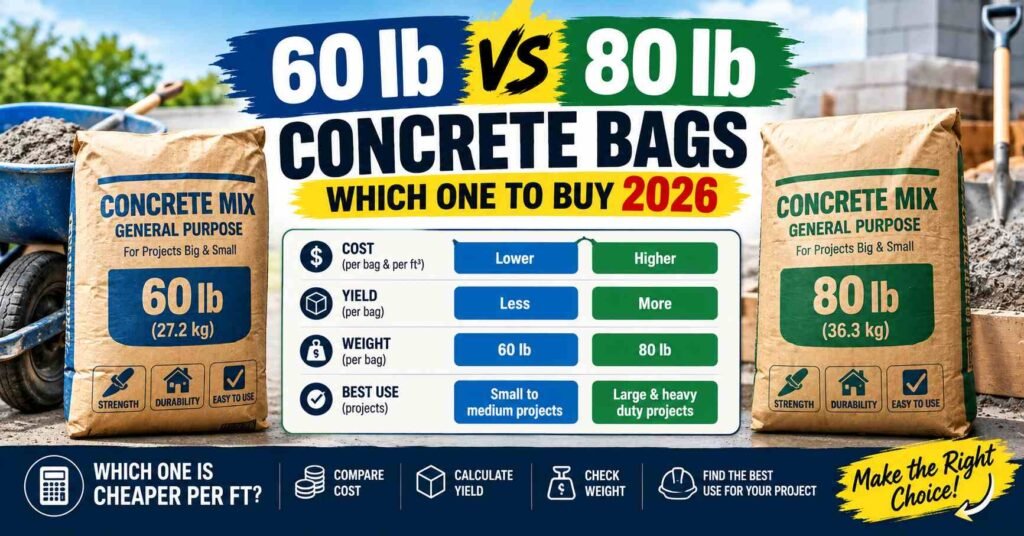
When evaluating 60 lb VS 80 lb Concrete Bags, understanding yield is essential. A typical 80 lb bag produces about 0.60 cubic feet, while a 60 lb bag produces about 0.45 cubic feet. For 1 cubic foot of concrete, you need about 2 bags of 80 lb or 3 bags of 60 lb. The 60 lb bag is easier to lift and carry, making it a practical choice for small DIY projects. An 80 lb bag is heavier, but it produces more concrete per bag. Do not assume the 80 lb bag is always cheaper.
Compare the price per cubic foot, not just the price of one bag. Concrete strength does not come from bag weight alone. It depends on the product, mix design, water amount, and curing. Use 60 lb bags when easier handling matters. Choose 80 lb bags when you need more concrete per bag and can manage the weight. Always check the actual yield printed on the bag.
| Feature | 60 lb Bags | 80 lb Bags |
| Dry mix weight | 60 lb | 80 lb |
| Approximate yield | 0.45 cu ft | 0.60 cu ft |
| Bags per 1 cu ft | About 3 | About 2 |
| Main advantage | Easier handling | More concrete per bag |
60 lb vs 80 lb Concrete Bags Yield Comparison
Yield: A typical 80 lb bag produces about 0.60 cubic feet, while a 60 lb bag produces about 0.45 cubic feet. For 1 cubic foot of concrete, you need about 2 bags of 80 lb or 3 bags of 60 lb.
Handling: The 60 lb bag is easier to lift and carry, making it a practical choice for small DIY projects. An 80 lb bag is heavier, but it produces more concrete per bag.
Cost: Do not assume the 80 lb bag is always cheaper. Compare the price per cubic foot, not just the price of one bag.
Strength: Concrete strength does not come from bag weight alone. It depends on the product, mix design, water amount, and curing.
Best choice: Use 60 lb bags when easier handling matters. Choose 80 lb bags when you need more concrete per bag and can manage the weight. Always check the actual yield printed on the bag.
60 lb vs 80 lb Concrete Bags: Which Is Better for Your Project
Small DIY Repairs
The right choice between 60 lb VS 80 lb Concrete Bags depends on your project, the amount of concrete needed, and how you plan to do the work. The bag size does not tell you how strong the concrete is. It mainly shows the quantity of concrete in the bag and how easy it is to handle.
For small DIY jobs, such as filling cracks, repairing steps, or making small concrete repairs, a 60-lb bag can be a convenient choice. It is easier to lift and handle, making it useful for small projects around the home.
Patios and Concrete Slabs
For a patio or concrete slab, you first need to calculate the total concrete volume. Measure the project and find the cubic feet or cubic yards required. Then, you can compare whether choosing 60 lb VS 80 lb Concrete Bags is practical, or whether ready-mix concrete would be a better option. The slab thickness depends on the project design, not on the bag size. Before choosing an option, compare the material cost, labor, time, and overall project size.
Fence Posts and Small Footings
For four or five fence posts, 60-lb bags are easier to carry and handle. The amount needed depends on the hole size, depth, and total number of posts.
Larger Concrete Projects
For projects requiring more than one cubic yard, especially when many bags would be needed, ready-mix concrete can save time and labor. It may cost more initially, but it can reduce mixing and handling work. For structural projects, always follow the concrete manufacturer’s instructions and project requirements.
How to Calculate the Number of 60 lb or 80 lb Concrete Bags
Step 1: Calculate the Concrete Volume
Finding the required number of 60 lb VS 80 lb Concrete Bags is easy when you follow a few simple steps. First, calculate the concrete volume using:
Length × Width × Thickness = Cubic Feet
Convert the slab thickness from inches to feet by dividing it by 12. For example, 4 inches ÷ 12 = 0.333 feet.
Step 2: Convert Cubic Feet to Cubic Yards
Once you have the cubic feet, convert them into cubic yards. Ready-mix concrete is usually ordered by the cubic yard, so this conversion is useful.
Cubic Feet ÷ 27 = Cubic Yards
One cubic yard equals 27 cubic feet.
Step 3: Divide by the Bag Yield
Now divide the required concrete volume by the yield of the selected bag. A typical 60-lb bag may yield about 0.45 cubic feet, while an 80-lb bag may yield about 0.60 cubic feet. Always check the product label because bag yield can vary between brands.
Step 4: Add Waste Allowance
Add around 5–10% extra concrete to cover measurement errors, uneven areas, spillage, and other small losses.
Worked Example: 10 × 10 Slab, 4 Inches Thick
For a 10 × 10 slab that is 4 inches thick:
Area = 10 × 10 = 100 sq. ft.
Thickness = 4 ÷ 12 = 0.333 ft.
Volume = 100 × 0.333 = 33.3 cu. ft.
60-lb bags = 33.3 ÷ 0.45 = 74 bags
80-lb bags = 33.3 ÷ 0.60 = 56 bags
These figures are estimates, not fixed amounts. Always check the actual product yield and verify your calculations before ordering.
60 lb vs 80 lb Concrete Bags: Handling and Labor Differences
When deciding between 60 lb VS 80 lb Concrete Bags, weight affects more than just the price. It also affects the amount of physical effort needed during the project. An 80-lb bag is 20 lb heavier than a 60-lb bag. That difference can become noticeable when you are lifting and handling bags throughout the day. 80-lb bags may require fewer bags because they contain more concrete, but they are harder to lift, move, and mix.
Handling heavier bags can also make the work take longer. 60-lb bags require more bags for the same project, but each bag is lighter and easier to carry and handle. For DIY users, especially when working alone, 60-lb bags can be a more manageable option. Choose the bag size according to your physical strength and the amount of work involved. Always use safe lifting techniques.
Lift with your knees rather than your back, and ask for help when a bag feels too heavy. Choosing a manageable bag size can make the job easier, safer, and more comfortable.
Common Mistakes When Choosing Between 60 lb and 80 lb Bags
When choosing between 60 lb VS 80 lb Concrete Bags, people often make mistakes that can affect both their budget and working time. A cheaper bag does not always mean a lower cost per cubic foot. Compare the price and yield to find the actual cost.
Use this simple formula: Price ÷ Bag Yield = Cost per Cubic Foot.
Every brand can have a different concrete mix and yield. For example, one bag may yield 0.60 cubic feet, while another may yield 0.59 cubic feet. Always check the bag label for the exact yield and product information before buying. Your project needs a specific volume of concrete, not simply a certain number of bags. First calculate the required volume, then determine how many bags you need.
Add around 5–10% extra for waste caused by spills, uneven areas, or measurement mistakes. Bag weight and concrete strength are two different things. A heavier bag does not automatically mean stronger concrete. Always read the manufacturer’s instructions on the bag, including mixing, use, and strength information. Do not assume that bags from different brands are interchangeable. Follow the specific instructions for the product you choose to avoid strength or performance problems.
60 lb vs 80 lb Concrete Bags: Pros and Cons
Comparing 60 lb VS 80 lb Concrete Bags shows that every bag size has its own advantages and disadvantages. The right choice depends on your project, workload, and handling needs.
| Factor | 60 lb Bags | 80 lb Bags |
| Handling | Easier to carry and lift for most people | Heavier to lift each time |
| Bags required | You will need more bags | You will need fewer bags |
| Yield per bag | Produce less concrete per bag | Produces more concrete per bag |
| Cost comparison | Depends on the price and yield | Depends on the price and yield |
| Best for | Small jobs and when easy handling is easier | Large jobs and when you want fewer bags |
Advantages of 60 lb Bags
- Easier to lift, carry, and handle.
- Good for small home and DIY projects.
- More manageable when working alone.
- Suitable for hand mixing.
- Reduces the physical effort needed for each bag.
Advantages of 80 lb Bags
- Contains more concrete per bag.
- Requires fewer bags for the same project.
- Can help complete larger jobs faster.
- Fewer bags can mean less handling and packaging waste.
Which One Should You Buy
When weighing 60 lb VS 80 lb Concrete Bags, choose 60-lb bags when easy handling and convenience are important, especially for hand mixing or smaller projects. Choose 80-lb bags for larger projects where fewer bags and higher volume per bag are more practical. Before buying, compare the bag yield, price, project size, labor, and handling requirements. No single bag size is best for every situation. Choose the option that fits your project and working conditions.
Frequently Asked Questions
Is an 80 lb Concrete Bag Better Than a 60 lb Bag?
No, not always. 80-lb bags are better for larger projects because they contain more concrete and require fewer bags. 60-lb bags suit small DIY jobs.
Can I Use 60 lb and 80 lb Bags Together?
Yes, you can use both, but make sure the products have compatible mixes and strength requirements. Always check and follow the manufacturer’s instructions.
Is the 80 lb Bag Always Cheaper?
No. Compare the price per cubic foot instead of the bag price alone. Sometimes a 60-lb bag offers better value, while an 80-lb bag may be cheaper.
Conclusion
When evaluating 60 lb VS 80 lb Concrete Bags, remember that both are designed for different types of projects. 60-lb bags are often suitable for small jobs, such as filling cracks, making minor repairs, and DIY concrete projects. 80-lb bags are more useful for larger projects because each bag contains more concrete and fewer bags may be needed.
The best choice depends on the bag yield, total cost, project size, and safe handling. Before buying, calculate the total concrete volume required for your project. Check the yield information printed on the bag to determine how many bags you will need.
Do not assume one bag size is best for every project. Choose the size that fits your specific work and handling needs. Always follow safe lifting practices, especially when handling heavier 80-lb bags.