Concrete Driveway Thickness: Complete Guide in 2026
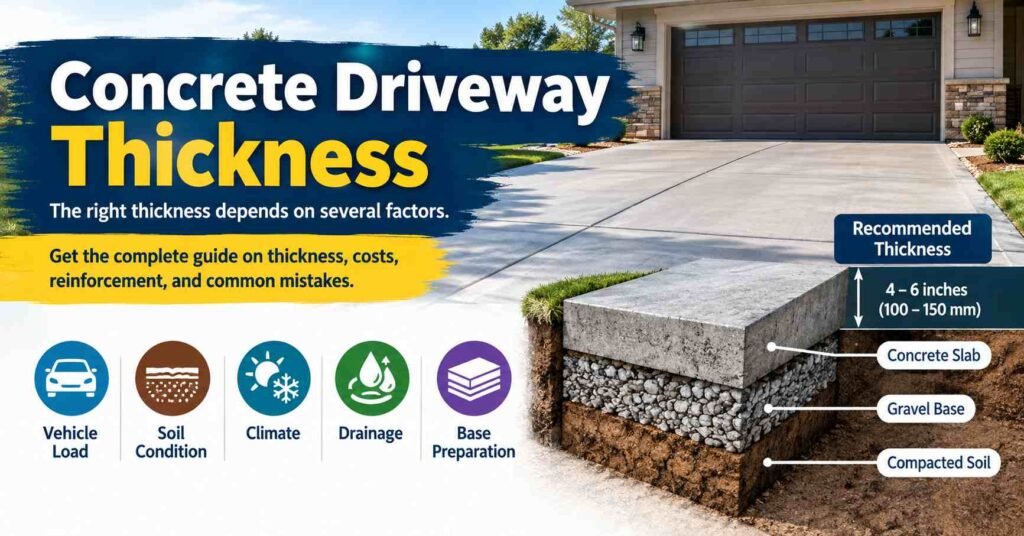
How thick should a concrete driveway be if you want it to handle daily vehicle traffic without unnecessary concrete costs? For most residential driveways, a 4-inch concrete slab is a practical and cost-effective choice for regular family cars. If you expect heavier vehicles, such as large trucks, a 5- to 6-inch slab may be more suitable.
Still, thickness is not the only factor that makes a driveway strong. A properly prepared and compacted base is equally important because a weak base can lead to cracks and settlement, even with thicker concrete. Soil type, vehicle weight, drainage, weather, and local building codes should also be considered before choosing the thickness. The right concrete driveway thickness should be selected based on these factors.
The American Concrete Institute commonly recommends about 4 inches for residential driveways, but requirements can vary by location. Always check local codes and match the slab thickness to your actual needs.
We’ll explore the standard concrete driveway thickness, the right thickness for different vehicle types, how soil, climate, and the base affect thickness, whether reinforcement is needed, how thickness affects cost, common mistakes, and how to choose the right thickness for your driveway.
What Is the Standard Concrete Driveway Thickness
The standard thickness for a residential concrete driveway is usually 4 inches. This is common for homes where the driveway is mainly used for regular cars, such as a Mehran, or light vehicles.
4 inches: A common choice for normal residential driveways with regular car use.
5 inches: Can be suitable for areas with greater loading or heavier vehicles.
6 inches: May be needed where heavy vehicles, such as trucks, use the driveway regularly. This type of design may require an engineer’s advice.
Driveway thickness is not the same for every project. Soil conditions, weather, drainage, vehicle weight, and how often the driveway is used can all affect the required thickness. The 4- to 6-inch range is a starting point, not a final rule. The ideal concrete driveway thickness depends on the specific project requirements. Your actual project requirements should be checked before choosing the thickness.
Always consider local building codes and the expected vehicle load. For heavy-use driveways, getting the design checked by a qualified professional can help ensure the slab is suitable for the site.
Concrete Driveway Thickness by Vehicle Type
- Inch Concrete Driveway
A 4-inch concrete driveway is a common choice for normal residential traffic. It works well for passenger cars such as an Alto or Corolla and some small SUVs or jeeps.
It is suitable for regular home use and everyday vehicle parking.f
A properly prepared and compacted base is important for good support. For normal vehicle loads and well-prepared soil, 4 inches can be enough.
- Inch Concrete Driveway
A 5-inch concrete driveway provides extra strength for heavier vehicles and more frequent loading. It can be suitable for larger SUVs, such as a Fortuner, and pickup trucks like a Hilux.
It may also work for work vehicles or occasional commercial vehicle use. If a heavy vehicle visits the driveway sometimes, 5 inches can provide an additional margin compared with 4 inches.
- Inch Concrete Driveway
A 6-inch concrete driveway is generally considered for heavier and more frequent loads. It may be needed for heavy trucks, large commercial vehicles, trailers, or areas with regular heavy loading.
The required thickness should be based on the actual vehicle weight and expected traffic, not only the vehicle name. Some guidance places typical passenger cars around 3,000–4,000 pounds, while heavier truck use may require a 5- to 6-inch slab.
For heavy-use driveways, the final thickness should be checked against site conditions, local requirements, and the expected load. This helps determine the appropriate concrete driveway thickness for each vehicle type.
How Soil and Subgrade Affect Concrete Driveway Thickness
Soil and subgrade conditions can have a major effect on concrete driveway thickness. A thick slab alone cannot solve problems caused by weak or poorly prepared ground.
Clay soil can expand when it gets wet and shrink during dry weather. These repeated changes can put stress on the driveway. Soft or loose soil may settle over time if it is not properly compacted. This can cause the driveway to sink, crack, or become uneven.
Poor drainage can also create problems. Standing water around or under the driveway can weaken the supporting soil and increase the risk of cracks. A properly prepared base usually includes well-placed gravel and good compaction to provide stable support. The soil, subgrade, and base should be prepared according to the site conditions before pouring the concrete.
For example, even a 6-inch concrete slab can develop problems if it is placed over a weak or poorly compacted base. Alternatively, a properly prepared subgrade can help the driveway handle normal loads more effectively.
The key point is that driveway strength depends on both slab thickness and ground support. Thus, concrete driveway thickness should be considered together with soil and subgrade conditions. Soil conditions, drainage, subgrade preparation, and expected vehicle loads should all be considered when deciding the final driveway design.
How Climate Affects Concrete Driveway Thickness
Climate can affect how a concrete driveway should be designed. A driveway in a cold, freezing area may need different preparation than one in a warm climate.
In cold regions, water can freeze in the soil and expand. When it later thaws, the ground can move and put stress on the concrete slab.
Good drainage is important because trapped water can freeze under the driveway and increase the risk of cracking or movement. In areas with repeated freeze-thaw cycles, air-entrained concrete is often used. Tiny air spaces in the concrete give freezing water room to expand and can help reduce damage.
Cold-climate driveways may also need proper base preparation, drainage, and concrete quality, rather than simply making the slab thicker. In warmer regions, freeze-thaw protection may be less important, but heat, drying, soil movement, and drainage still need to be considered.
There is no single driveway design that works for every location. Climate is also an important factor when selecting concrete driveway thickness. Climate, soil, drainage, vehicle loads, and local requirements can all affect the final design.
Guidance from concrete and building sources also recognizes that local weather conditions should be considered when designing concrete pavements. Concrete driveway thickness should be selected along with the right base, drainage, and concrete mix for the local climate.
Do You Need Rebar or Wire Mesh in a Concrete Driveway
Reinforcement can help a concrete driveway handle loads and control how cracks develop. Wire mesh is often used for lighter-duty applications. Rebar provides stronger reinforcement and may be used for heavier loads or larger driveway designs. Reinforcement does not completely prevent cracks.
Concrete can still crack as it shrinks, moves, or experiences changes in temperature. Otherwise, properly placed reinforcement helps hold cracks together and limit their opening. The amount and size of rebar or mesh depend on the vehicle loads, soil conditions, slab design, and local requirements. Correct placement is important. If reinforcement is left at the bottom of the slab instead of being positioned as designed, it may not provide the intended benefit.
Not every driveway needs the same reinforcement. The required reinforcement can also depend on the selected concrete driveway thickness. A light residential driveway and a heavy-use driveway may require different designs.
Reinforcement helps control cracks; it does not guarantee a crack-free driveway. Follow the project design and local requirements when choosing and placing rebar or wire mesh.
Should Driveway Edges Be Thicker
Driveway edges can carry more stress because they have less support than the center of the slab. Vehicle tires often travel close to the edges, increasing the load in these areas. The center of the driveway usually has better support from the surrounding base and soil.
The edges have less side support, so they can be more vulnerable to cracking or damage. Making the edges 1–2 inches thicker can provide additional strength for some driveway designs. A thicker edge can help the driveway handle vehicle loads and reduce the risk of edge damage. The required edge thickness depends on the driveway design, soil, expected traffic, and vehicle loads.
These factors should be considered when choosing the overall concrete driveway thickness. The entrance area may also need special consideration because vehicles apply extra stress when entering or turning.
Some driveway designs use thicker edges, while certain local requirements may call for additional thickness at entrances. Always follow the project design and applicable local requirements rather than using one thickness for every driveway.
How Much Does Concrete Driveway Thickness Affect Cost
A thicker driveway usually needs more concrete; thus, the overall project cost can increase. Increasing a slab from 4 to 5 inches can require about 25% more concrete for the same area. More thickness can also increase labor, formwork, and base preparation costs. Adding rebar or other reinforcement can increase the total cost as well.
The final price is not based on concrete alone. Base preparation, delivery, labor, reinforcement, and other work should also be included. When comparing contractor quotes, do not look only at the lowest price. Check what each quote includes and why one price may be much lower.
Ask each contractor to clearly break down the concrete, labor, base preparation, reinforcement, and other costs. The goal is to choose the thickness your project needs, rather than paying extra for unnecessary thickness.
Common Mistakes When Choosing Concrete Driveway Thickness
A 4-inch driveway may not handle frequent heavy vehicle loads well. The extra stress can lead to cracks and surface damage. Expansive, weak, or poorly drained soil can move under the driveway. This movement may cause cracking, settling, or uneven slabs. Concrete thickness alone cannot compensate for a weak base.
A proper sub-base helps distribute vehicle loads and supports the slab. If the soil or sub-base is not compacted properly, it can settle later. This leaves unsupported areas under the concrete and may cause the slab to sink or crack. Standing water can weaken the soil beneath the driveway and increase the risk of cracks, settlement, and other damage.
Adding more thickness does not fix poor soil, weak sub-base, or bad drainage. A properly prepared base is still essential. Local codes may specify requirements for driveway construction, drainage, thickness, or reinforcement. Ignoring them can create compliance and construction problems.
Reinforcement works best when it is positioned correctly within the slab. If it is placed too low, too high, or against the sides, it may not provide the intended support. Driveway edges and entrance areas can experience concentrated wheel loads. Weak edges are more likely to crack or break; thus, these areas may need additional support or thickness.
An incorrect volume calculation can leave you short of concrete during the pour. Calculate the required volume carefully and allow for a small extra amount. Freeze-thaw cycles can damage concrete when water freezes and expands inside it. In cold climates, the appropriate air-entrained concrete and proper construction practices may be needed.
How to Choose the Right Concrete Driveway Thickness
Step 1: Check the Vehicle Load
First, decide what vehicles will use the driveway. Consider normal family cars, SUVs, trucks, and whether heavy vehicles will use it regularly or only occasionally.
Step 2: Evaluate the Soil
Check the soil beneath the driveway. Weak, loose, or expansive soil may need better preparation because soil movement can cause the concrete slab to crack or settle.
Step 3: Plan the Sub-Base
Choose an appropriate sub-base material and thickness for the site conditions. The base should be spread evenly and compacted properly before pouring concrete.
Step 4: Consider Weather and Drainage
Look at the local climate and how water will drain from the driveway. Areas with heavy rain or freeze-thaw conditions may need additional preparation and suitable concrete.
Step 5: Check Reinforcement
Decide whether rebar or wire mesh is needed for the driveway. If reinforcement is used, it should be positioned correctly within the slab rather than placed directly on the ground.
Step 6: Check Local Requirements
Review your local building codes and driveway requirements before construction. These rules may affect thickness, drainage, reinforcement, and other construction details.
Step 7: Strengthen the Driveway Entrance
Pay special attention to the area where vehicles enter from the road. Turning and concentrated wheel loads can put extra stress on the entrance and edges.
Step 8: Calculate the Concrete Quantity
Measure the driveway’s length, width, and planned thickness to calculate the concrete volume. Add a small allowance so you do not run short during the pour.
Step 9: Compare Contractor Quotes Carefully
Do not compare contractors by price alone. Check what thickness, sub-base preparation, reinforcement, concrete type, and other work each quote includes.
Step 10: Match Thickness to the Whole Site
Finally, choose the thickness based on the vehicle load, soil, sub-base, climate, drainage, reinforcement, and local requirements together. A thicker slab is not automatically better if the supporting base is poorly prepared.
Frequently Asked Questions
Q: What is the best base for a concrete driveway?
A 4–6 inch layer of crushed gravel is commonly used. Compact the soil and gravel well, especially with clay soil.
Q: Does thicker concrete prevent cracks?
No. Cracks can still occur from weak soil, poor compaction, poor drainage, or other construction problems.
Q: Does climate affect driveway thickness?
Yes. Cold climates need proper drainage and air-entrained concrete to handle freeze-thaw cycles; simply adding thickness may not prevent damage.
Conclusion
4 inches: Often suitable for light-duty driveways used mainly by regular cars, when the soil and sub-base are properly prepared.
5 inches: May be considered for driveways that will carry heavier vehicles, such as SUVs or occasional light trucks, depending on site conditions.
6 inches or more: May be needed for frequent heavy loads, commercial vehicles, or other demanding applications. An engineer may be needed to determine the appropriate design.
These thicknesses are only general starting points. The final concrete driveway thickness should match the site conditions and expected use. Do not choose driveway thickness based on vehicle weight alone. Soil condition, sub-base strength, drainage, weather, reinforcement, traffic frequency, and local building requirements should also be considered.
For each project, check local codes and site conditions before deciding the final concrete thickness. For heavy-duty or specialized driveways, having the design reviewed by a qualified engineer can help determine the appropriate slab and base requirements.