How Long Does Concrete Take to Cure: Complete Guide in 2026
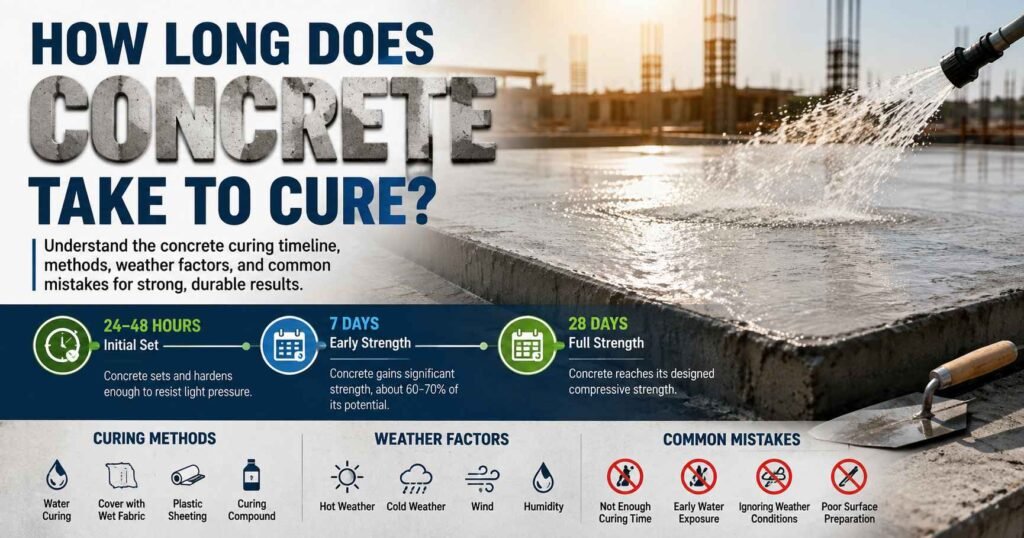
How Long Does Concrete Take toCure? In 28 days the real time concrete takes to cure but can you walk on it after just one day? Concrete generally reaches its design strength at around 28 days when properly cured. That is why professionals commonly use 28 days as the standard curing period for concrete slabs and other structures. It depends on the weather and project conditions.
Concrete starts gaining strength within 24–48 hours, and you can usually walk on it carefully. On the other hand, avoid placing heavy loads or equipment on it at this stage. On the other hand, these timeframes can vary depending on the project and conditions.
Concrete strength development mainly depends on:
– Temperature
– Moisture
– Mix design
– Project type and requirements
– Curing method
So, 28 days is a standard reference, not a fixed rule for every project. Some concrete may take longer, while specially designed mixes can reach their required strength sooner.
Below, we will explain how long does concrete take to cure when you can walk on it, how temperature, moisture, and mix design affect curing, and how proper curing helps concrete develop strength over time.
How Long Does Concrete Take to Cure
- First 24 hours: Concrete begins to harden and set.
- After 7 days: It can handle some light work or smaller loads, depending on the project.
- After 28 days: Concrete generally reaches its specified design strength, which is why engineers commonly use this point for testing and evaluation.
On the other hand, 28 days is not a fixed curing time for every project. Concrete can continue gaining strength after 28 days as hydration continues, especially when suitable moisture is available. Temperature, moisture, mix design, and curing conditions can all affect the rate of strength development.
Organizations such as Concrete Network, Evanson Concrete, and NPCA emphasize that 28 days is mainly a practical reference point for evaluating concrete strength rather than a universal point at which curing completely ends.
Concrete Curing Time vs. Drying and Setting
What Is Concrete Setting
Concrete setting is the stage when fresh, wet concrete begins changing from a fluid state into a solid form after being placed in its proper location. Think of water turning into ice in a freezer, it changes from liquid to solid. Similarly, concrete starts becoming firm during setting. On the other hand, at this stage, it has not yet developed its full strength or structural properties.
What Is Concrete Drying
Concrete drying happens as the concrete continues to lose some of its moisture after setting. Water within the concrete gradually moves and evaporates, so the surface begins to feel dry. While the concrete may look dry from the outside, it is still developing strength internally. Drying and strength development are not the same thing. So dry-looking concrete does not necessarily mean fully strong concrete.
What Is Concrete Curing
Concrete curing is the process that helps concrete develop strength through hydration the chemical reaction between cement and water. It is very important to know how long does concrete take to cure. Proper curing keeps enough moisture available so this reaction can continue. Curing conditions also depend on temperature and weather.
In hotter conditions, concrete can lose moisture faster, so maintaining adequate moisture becomes especially important. In cooler conditions, hydration generally happens more slowly, so curing may take longer. Proper curing helps concrete gradually become stronger and more durable.
How Long Does Concrete Take to Cure at Different Stages
Time Line
| Time After Pouring | Typical Stage | What It Means |
| First few hours | Setting begins | Concrete becomes progressively less workable and starts to harden |
| 24-48 hours | Early hardening | The surface is firm enough for careful foot traffic, but still fragile |
| Around 7 days | Early strength development | Concrete has gained a large portion of its eventual strength. Light vehicle traffic may be possible |
| 14 days | Continued strength gain | Hydration and strength development continues steadily |
| 28 days | Standard strength benchmark | This is the common age used for specified compressive-strength testing |
| Beyond 28 days | Ongoing development | Strength may continue increasing over time depending on mix design and curing conditions |
Concrete curing timelines are useful guidelines, not fixed rules for every project. While 28 days is common, the actual time can vary. Strength also depends on proper mix design, mixing, placement, moisture, temperature, and curing conditions.
Why Does Concrete Take 28 Days to Cure
The commonly mentioned 28-day period should not be treated as a fixed deadline for every concrete project. It is mainly used as a standard reference point for checking concrete strength and comparing performance under practical conditions. Engineers may use this period to evaluate whether the concrete has reached the expected strength level.
On the other hand, curing does not automatically stop when 28 days are completed. According to the NPCA, concrete can continue gaining strength beyond this period as long as suitable moisture and curing conditions are maintained. As a result, 28 days is better understood as a testing benchmark rather than the exact point when concrete becomes fully strong.
The actual strength development can vary depending on factors such as mix design, materials, temperature, moisture, and curing practices. Some concrete mixes may achieve a significant portion of their required strength within the first 7 days, while others may continue developing strength for longer.
Project specifications also matter. If a project requires a particular strength level by a specific age, the concrete must be evaluated how long does concrete take to cure according to those requirements rather than relying only on the 28-day guideline.
Factors That Affect How Long Does Concrete Take to Cure
Temperature
I only organized your ideas and improved the English wording.
Your original points are:
- Hydration happens faster, so concrete gains strength more quickly.
- Hydration slows down, so concrete takes more time to gain strength.
Water evaporates too quickly, which can cause cracks and prevent concrete from developing its intended strength.
Temperature directly affects concrete hydration, curing, and strength development.
Moisture and Humidity
Moisture is essential for concrete to gain strength because hydration requires water for the chemical reactions between cement and water to continue properly. On the other hand, curing does not mean adding excessive water. The goal is to maintain a suitable moisture level and prevent the concrete from drying too quickly.
Rapid moisture loss, especially soon after placement, can interrupt hydration and increase the risk of cracks. Proper curing is therefore more than simply keeping the surface wet. This involves controlling moisture conditions so that the internal chemical reactions can continue effectively, allowing the concrete to develop strength properly and more consistently. These are the main point of how long does concrete take to cure.
Concrete Mix Design
The water-cement ratio needs to be properly controlled because it directly affects concrete strength and performance. Adding too much water can increase the risk of cracking and reduce the concrete’s overall strength. On the other hand, using too little water can make the mix difficult to work with and may not provide enough moisture for proper hydration. The type of cement also matters because different cement types can have different strength-development characteristics.
Admixtures are chemical materials added to concrete to modify its properties. Accelerators can speed up the curing and strength-development process, while retarders slow it down when more working time is needed. The required concrete strength also influences the proportions and quantities of materials used in the mix.
Wind and Direct Sunlight
Direct wind and sunlight can cause concrete to lose moisture too quickly, especially on exposed surfaces such as floors, roofs, and slabs. Strong sunlight increases surface evaporation, while direct airflow can speed up the loss of water from freshly placed concrete.
When moisture disappears too quickly, the concrete may not have enough time to develop properly through hydration, increasing the risk of early cracking. As a result, exposed concrete surfaces need suitable protection during curing to reduce rapid moisture loss and give the concrete enough time to develop strength properly.
Concrete Thickness and Project Conditions
Concrete thickness and project conditions can affect how concrete behaves during drying and curing, but thickness alone does not determine how strong the concrete will be. The mix design is a major factor because the materials need to be properly proportioned and mixed before the concrete can develop its intended properties.
For example, both a thick and a thin concrete slab may dry quickly when exposed to strong sunlight, but rapid drying can increase the risk of cracking if proper moisture is not maintained. As a result, a well-prepared mix and suitable curing conditions are important for proper strength development.
How to Cure Concrete Properly for Better Strength
Start Curing at the Right Time
Concrete curing should begin at the right time, after the concrete has set enough that the curing process will not damage its surface. Avoid starting too early when the surface is still too fresh.
Starting curing at the proper time helps concrete maintain the moisture needed for cement hydration. If curing is delayed for too long, especially for a day or two, the concrete can lose moisture before hydration develops properly. This may reduce strength development and increase the risk of surface cracking.
The goal is simple: start curing at the right point and keep the concrete adequately moist so it can continue gaining strength.
Water Curing
Water curing is one of the best methods for maintaining moisture, but other options include fogging, ponding, sprinkling, and wet coverings. The suitable method depends on project and site conditions.
Wet Coverings
Wet coverings are a simple way to keep concrete moist during curing. Materials such as wet burlap, damp cloth, or similar moisture-holding coverings can be placed over the concrete surface. These coverings help slow down moisture loss and provide the moisture needed for continued cement hydration.
So, they should not be allowed to dry out completely. Once the covering becomes dry, it can no longer provide the same moisture to the concrete. Therefore, it needs to be kept damp throughout the required curing period so the concrete can continue developing strength properly.
Plastic Sheeting and Moisture-Retaining Covers
Plastic sheets can be used to cover concrete and help reduce water evaporation from the surface. They act as a barrier, keeping moisture inside the concrete for longer and supporting the curing process.
On the other hand, plastic covers can sometimes cause uneven color or surface appearance, especially when the sheet is in direct contact with the concrete. This may matter when the finished appearance is important.
Thus, it is better to test the plastic sheet on a small area first before using it over the entire project. This helps you check whether it provides the required moisture protection without causing unwanted changes to the concrete’s appearance.
Curing Compounds
Curing compounds are special products applied to the concrete surface to form a thin protective film. This film helps reduce moisture loss and evaporation, allowing the concrete to retain moisture for longer during the curing period.
They can be useful when regular water curing is difficult or impractical. On the other hand, if the concrete will later be painted, coated, or finished, it is important to choose a compatible curing compound. Some products may affect how later coatings bond to the surface, so checking product compatibility beforehand can help avoid finishing problems.
How Long Does Concrete Take to Cure Before You Can Walk on It
The time needed before walking on concrete depends on factors such as weather conditions, concrete mix, temperature, and the site environment.
Avoid unnecessary traffic and only allow very light walking if the surface has set properly.
Concrete is generally suitable for normal foot traffic, but it is still developing strength.
Do not use the surface for bicycles, dragging heavy objects, or other activities that can damage the fresh concrete.
Being able to walk on concrete does not mean it has reached its final design strength. Concrete continues gaining strength during the following days and weeks.
How Long Does Concrete Take to Cure Before Driving on It
Are you know how long does concrete take to cure, Normal walking and driving are quite different. A vehicle is much heavier, and its tires apply more pressure to the concrete than normal foot traffic. Thus, concrete needs more strength before it can handle vehicles.
After around 7 days, concrete usually gains enough early strength to handle light vehicles. On the other hand, driving on it before this time should be avoided because the concrete is still developing its strength.
Heavy vehicles, such as trucks, need more time. It is better to wait around 14 to 25 days before allowing heavy vehicles on the concrete. For large or heavy vehicles, the exact timing can depend on the project conditions, so getting advice from a professional is recommended.
What Happens If Concrete Is Not Cured Properly
Improper curing can reduce concrete’s strength, durability, and surface quality. Common problems include:
Surface Dusting: The concrete surface may start shedding or becoming powdery.
Cracking: Insufficient curing can cause shrinkage cracks and weaken the surface.
Low Abrasion Resistance: A weak surface wears down faster under regular foot or vehicle traffic.
Water Penetration: Poorly cured concrete can become more permeable, allowing water to enter more easily.
Reduced Service Life: Continued deterioration can shorten the concrete’s useful life and lead to costly repairs or replacement.
Causes and Effects
Inadequate moisture retention can also prevent proper strength development. As reported by Concrete Network, poor curing may contribute to dusting, cracking, reduced surface strength, and lower resistance to abrasion.
Common Mistakes That Delay or Damage Concrete Curing
Treating Dry Concrete as Fully Cured
Concrete looking dry does not mean it is fully cured. A surface may dry quickly due to sunlight or hot conditions while the concrete underneath is still developing strength. Surface appearance alone is not a reliable indicator of internal strength, so curing should continue for the required period and conditions.
Adding Excess Water to the Surface
Avoid adding excess water to the concrete surface or rubbing it in by hand. This can weaken the surface and cause dusting or surface deterioration. Concrete strength depends on the designed mix ratio, including the correct balance of water and cement. Extra surface water can disturb this balance instead of making the concrete stronger.
Exposing Fresh Concrete to Extreme Weather
Fresh concrete should be protected from extreme weather during the early curing period. Covering and protecting the concrete from harsh conditions helps maintain moisture, supports strength development, and promotes proper curing.
Putting Heavy Loads on Concrete Too Early
Avoid placing heavy loads on freshly poured concrete before it has developed enough strength. Light foot traffic may be possible after a short period, depending on conditions, but heavy vehicles, equipment, or materials should not be placed or dragged across the surface too early. Giving concrete enough time to cure helps prevent damage and surface deterioration.
Applying Paint or Stain Too Soon
Avoid applying paint or stain to newly poured concrete while it still contains excess moisture. The coating may not bond properly to the surface and can peel or fail. Always follow the product label for the recommended waiting period before applying any paint or stain.
How Long Does Concrete Take to Cure in Hot or Cold Weather
Concrete Curing in Hot Weather
In hot weather, concrete can lose moisture too quickly, which may slow proper strength development and increase the risk of cracking and surface weakness. To maintain moisture, a suitable curing compound can be applied to form a protective film that reduces evaporation. Fresh concrete should also be protected from direct sunlight and strong winds during curing.
Concrete Curing in Cold Weather
In cold weather, if you know how long does concrete take to cure, so concrete takes longer to develop strength because the cement-water reaction slows down. Depending on the conditions, curing may take 7 days or longer. Fresh concrete should be protected from excessive cold using insulating blankets or suitable heating methods when needed, helping maintain a suitable temperature for proper strength development.
Why Weather Changes the Curing Timeline
Weather conditions can change how quickly concrete cures because temperature, sunlight, wind, and rain affect moisture and hydration. In hot weather, water evaporates faster, which can increase cracking risk. In cold weather, the cement-water reaction slows down, so concrete may need more time to develop strength. Thus curing methods and timelines should be adjusted according to the project’s weather conditions.
Frequently Asked Questions
Q: How long does concrete take to cure completely?
Concrete gains most of its early strength within 28 days, but strength development can continue afterward, depending on weather conditions and the concrete mix.
Q: Can you walk on concrete after 24 hours?
Light foot traffic may be possible after 24 hours, but avoid heavy loads and consider weather and curing conditions.
Q: Is 28 days the exact time concrete takes to cure?
28 days is a standard testing point for checking concrete strength, not the point when strength development completely stops. Concrete can continue gaining strength beyond 28 days as hydration progresses.
Conclusion
Concrete starts to harden within a few hours, but its strength increases over time. Light foot traffic is usually possible after 24 to 48 hours, and by 7 days it gains a significant amount of strength. 28 days is considered the standard time for strength testing, yet hydration continues after that and the concrete can get even stronger with proper moisture. Remember, it’s not just about counting days. The mix design, weather, curing method, and project requirements all matter. For any structural work, always follow the engineer’s guidelines before applying heavy loads. They should know how long does concrete take to cure.