Concrete Calculator Explained: 99% Accuracy
A concrete calculator is an invaluable tool for anyone involved in construction or DIY projects, streamlining the planning process by providing precise estimates for concrete needs.
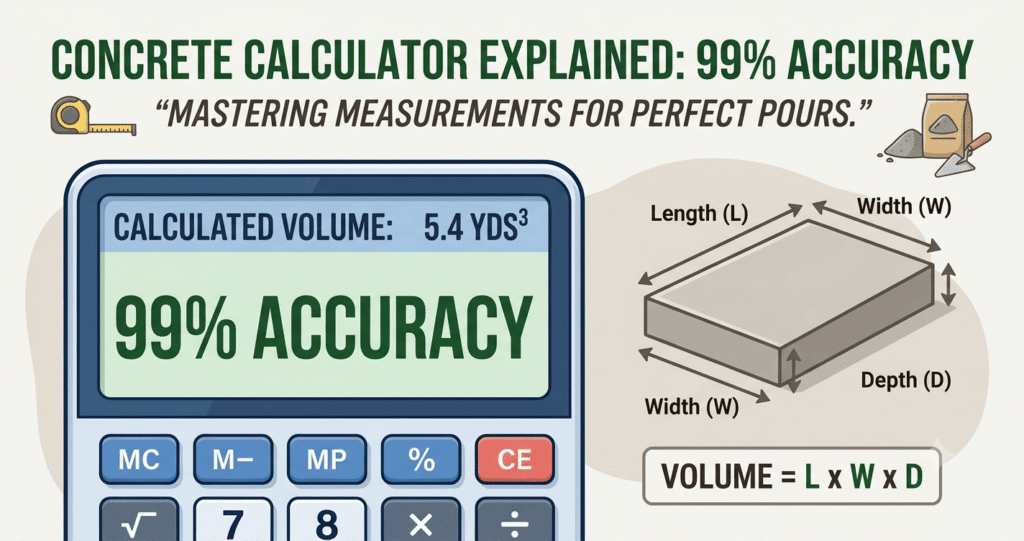
By inputting simple dimensions length, width, and depth the calculator employs mathematical formulas to determine the total volume required, ensuring that you don’t overestimate or underestimate your material needs.
Understanding the formulas behind a concrete calculator enhances your ability to make informed decisions. Typically, the calculation involves converting measurements into consistent units (like feet or meters) and using the formula: Volume = Length × Width × Depth.
What Is a Concrete Calculator?
A concrete calculator is an invaluable tool for anyone engaged in construction projects, big or small. By simply inputting the length, width, and depth of the area to be filled, users can quickly determine the cubic yards or cubic feet of concrete required.
This streamlined process not only saves time but also reduces the possibility of costly errors that can arise from manual calculations.
Just volume estimation, a concrete calculator also provides insights into logistics, such as how many ready-mix truck loads will be necessary based on the project size. For smaller projects, it can even specify how many bags of concrete you’ll need, enabling better planning for material purchases.
Including a waste allowance in its calculations ensures that you won’t be caught off guard by extra material needs.
Why Accurate Concrete Calculations Matter
In the construction industry, precision is paramount, especially when working with concrete. A concrete calculator is essential for accurately estimating the amount required for a project, ensuring that contractors order the right volume.
Even a slight miscalculation can result in excess material that goes unused or insufficient supply that stalls progress, both of which can escalate costs dramatically. Beyond just the financial implications, shortages can delay timelines, impacting labor schedules and pushing back project completions.
How Does a Concrete Calculator Work?
At its core, a concrete calculator leverages fundamental volume formulas to accurately determine the space that concrete will occupy. By inputting dimensions such as length, width, and depth, users can quickly estimate the necessary amount of concrete for their project, ensuring both efficiency and cost-effectiveness.
Understanding these calculations not only prevents waste but also aids in choosing the right mix for specific applications, whether it’s for a drive, a foundation, or even decorative elements.
Common Concrete Calculator Applications
Concrete calculators streamline the estimation process for a variety of residential and commercial projects, making them invaluable tools for builders and DIY enthusiasts alike.
For concrete slabs commonly used in garages, workshops, and foundations accurate measurements of length, width, and thickness are essential to ensure structural integrity and durability. The same precision applies to driveways, where larger volumes of concrete are necessary due to vehicle load requirements and thickness specifications, emphasizing the calculator’s role in customized project planning.
Patios represent another area where concrete calculators shine, offering homeowners the ability to estimate material needs for their outdoor living spaces accurately. With popular patio thicknesses ranging between 4 to 6 inches, knowing how much concrete to order can prevent costly overages or shortages.
How Much Concrete Is in a Bag?
| Bag Size | Approximate yield |
| 40 lb Bag | 0.30 cubic feet |
| 50 lb Bag | 0.37 cubic feet |
| 60 lb Bag | 0.45 cubic feet |
| 80 lb Bag | 0.60 cubic feet |
Should You Add Extra Concrete?
A standard waste allowance is an essential consideration when planning any construction project, ensuring that you’re not left in a lurch during installation. For simple projects, adding a 5% waste factor tends to suffice.
For more complex tasks requiring detailed precision, a buffer of 10% is advisable. Uneven excavation areas increase the unpredictability of material needs, making a 10–15% allowance not just sensible but necessary.
Factors like spillage and uneven ground can dramatically affect how much material you’ll need. Measurement inaccuracies, too, can lead to underestimating requirements, leaving you scrambling for additional supplies mid-project.
Common Mistakes When Using a Concrete Calculator
Even with modern tools like a concrete calculator, the accuracy of your measurements is paramount. One common pitfall is using inches instead of feet; depth is often measured in inches, but when you’re calculating for a larger area, it’s crucial to convert those figures to feet.
This simple oversight can lead to drastic errors and increased costs. Always double-check your conversions before inputting any measurements into your calculator to ensure you’re working with the right values.
Another frequent mistake is neglecting to account for waste allowance. Ordering precisely what you calculate may seem efficient, but construction projects are rarely flawless. By ensuring you have some leeway, you protect yourself against unexpected discrepancies.
Ready-Mix Concrete vs. Bagged Concrete
Ready-mix concrete is an excellent choice for larger projects, such as expansive driveways, solid foundations, commercial structures, and sizable patios. Its key advantages include faster installation and consistent quality, making it highly efficient for contractors and builders who need reliability.
Bagged concrete shines in situations that call for flexibility and portability. Ideal for fence posts, small repairs, and DIY projects, it’s perfect for those tackling minor slabs without the need for heavy machinery or complicated logistics.
When to Use an Online Concrete Calculator?
Online concrete calculators are invaluable tools for anyone involved in home renovation projects. These calculators help you determine the exact amount of concrete needed, ensuring you avoid costly overages or underestimates.
By inputting dimensions, users can quickly convert their measurements into cubic yards or cubic feet, providing clarity among various material requirements.
For landscaping installations, these calculators streamline the planning process. Imagine creating that perfect outdoor space rectifying the concrete needs for walkways, retaining walls, or garden beds becomes remarkably simple.
FAQs
What does a concrete calculator calculate?
A concrete calculator estimates the volume of concrete needed based on project dimensions such as length, width, and depth.
How many cubic feet are in a cubic yard of concrete?
There are 27 cubic feet in one cubic yard of concrete.
How much extra concrete should I order?
Most professionals recommend adding 5–10% extra concrete to account for waste, spillage, and measurement variations.
Conclusion
Utilizing a concrete calculator is essential for anyone undertaking construction or home improvement tasks. This invaluable tool not only ensures accurate volume estimations but also significantly minimizes waste and maximizes efficiency.
By controlling costs and aiding in precise planning, it can prevent frustrating delays that often arise from miscalculations. Incorporating a concrete calculator into your project workflow can lead to smoother execution and better resource management.